
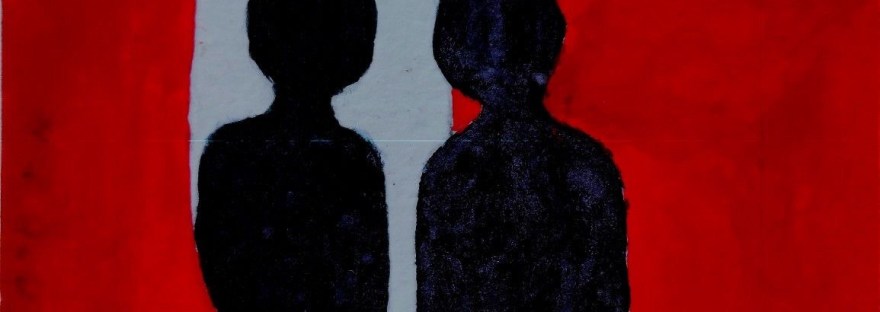
Lately I have been immersed in an advanced depth psychology studies on Jungian Shadow work, the deep, disciplined kind that asks us to face what we would rather not see. As part of this work, I watched the Netflix series ’Monster: The Ed Gein Story’ as a case study through a Jungian lens.
The show tells the story of Ed Gein, a real-life criminal whose actions shocked the world, and explores the psychological and familial dynamics behind his crimes (Content Warning: 18+, graphic violence, highly disturbing themes) as well as the impact it had on people’s psyche. People were fascinated by his story, and in many ways that fascination perpetuated violence by turning horror into spectacle.
What struck me most was not Ed Gein himself (although his story is incredibly disturbing and he represents Evil in its most profound way), but his Mother, the true architect of horror. She represents a powerful archetypal force, the negative Mother complex, the devouring, shaming, morally rigid mother who attacks instinct and autonomy. When this complex fuses with a vulnerable psyche, the result is not just psychological damage but a loss of humanity. This is what happens when the Shadow is never met, never held, never integrated. The show exposes this in its extreme and invites many questions about our own encounters with Shadow.
What is the Shadow?

In Jungian psychology, the Shadow holds everything we repress or deny, our rage, shame, fear, envy, taboo desire, but also our buried vitality, erotic truth, and creative force. When we refuse to see our Shadow, it acts without our permission through reactions, projections, addictions, cruelty, moral superiority, or self-sabotage.
There is also the collective Shadow, the darkness not just in individuals, but in our culture. We see it today in war, racism, dehumanisation, propaganda, gender violence, and the weaponisation of morality. Jung warned that when society refuses to face its collective Shadow, it becomes capable of repeating the worst chapters of history and calling it necessity.
The Shadow does not disappear when ignored. It waits and it leaks.
Shadow work is not trendy. It is not positive psychology. It is ethical work, the lifelong task of becoming whole.
It asks of us:
Can I face the truth of my own psyche without collapsing? Can I hold instinct without becoming destructive? Can I integrate power without abusing it? Can I stay human when the world is pulling toward inhumanity?
This is the depth of work I am committed to in myself and with the people I work with. If you are curious about exploring your own Shadow safely and deeply, or want to understand how hidden parts of yourself influence your life and relationships, I invite you to begin the journey. This is not only a curious personal question to explore, but an invitation to our own humanity and a moral and ethical obligation I believe we all need to be accountable for, given the state of our world today.
What were your thoughts and reactions to the show?
A.

 Aleksandra Staneva, PhD - Internal Family Systems & Jung